Fake or altered VIN: how to spot it before buying
Where the VIN must match, what traces a re-stamped or cloned VIN leaves behind, and what to do if the VIN doesn't match the car's documents.
The VIN is the car's ID card. Whoever alters it usually wants one of two things: to sell a stolen car with "clean" papers, or to hide the past of a damaged car under the identity of another one. For the buyer, the result is the same: the police can seize the car at the first check, and the money is hard to recover.
The good news: an altered VIN almost always leaves traces. Below, step by step, is where to look, which signs to watch for and what to do if you find something.
How a VIN gets faked
- Re-stamping: the original number on the body is ground off and a different one is stamped over it.
- Cloning: a stolen car receives the VIN and papers of an identical car, usually a damaged or scrapped one. On paper, everything looks fine.
- Swapped labels: the plate behind the windscreen or the door label is replaced with one taken from another car.
- Patching: the piece of body carrying the VIN is cut from a donor car and welded onto another.
Where the VIN must match
The same VIN, character for character, must appear in every place below. If you don't know where each one is on your model, the usual locations are in our guide on where to find the VIN.
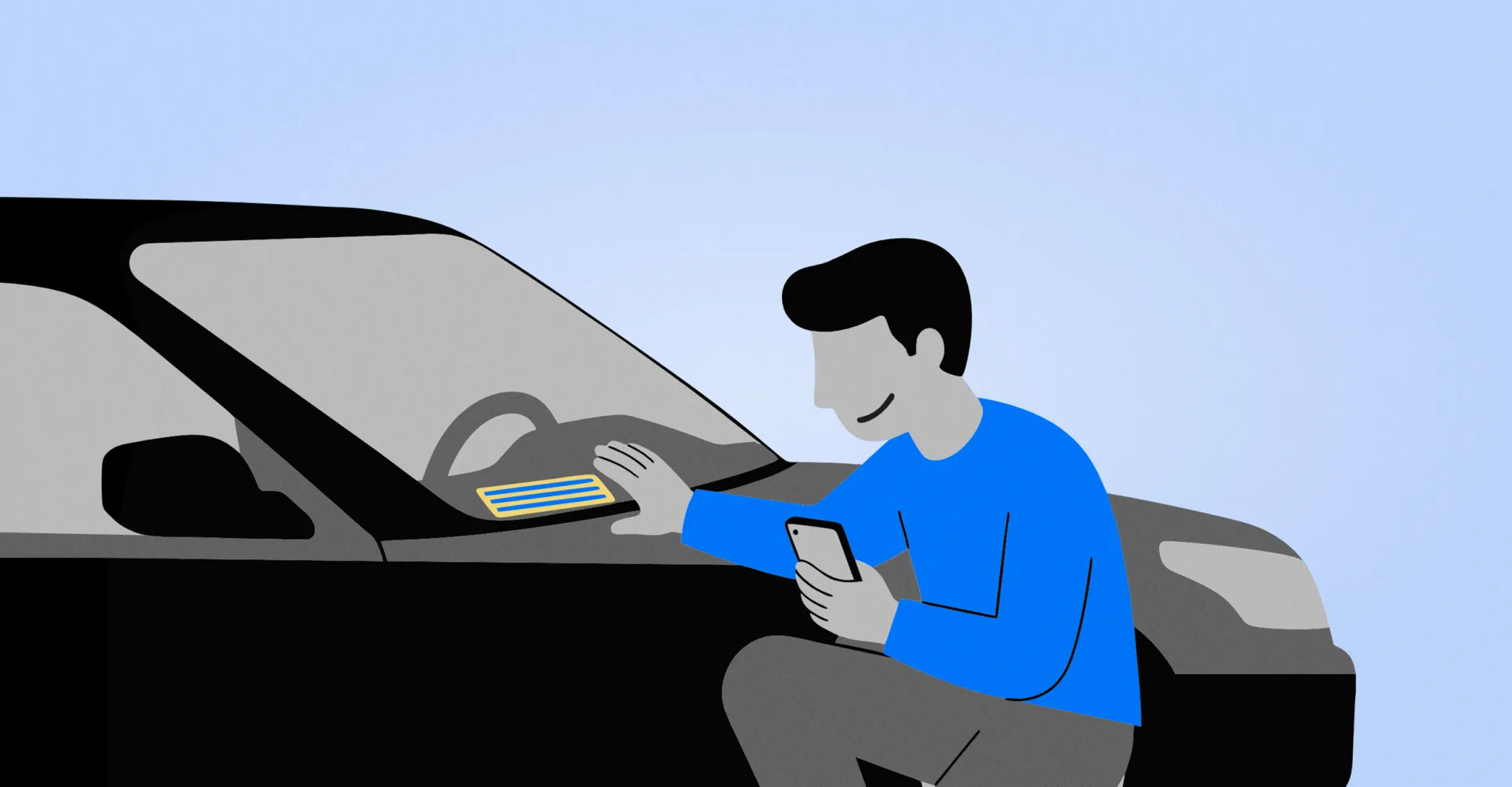
- the plate visible through the windscreen, at the bottom;
- the number stamped into the body (under the bonnet, in the floor or under a seat, depending on the model);
- the label on the door pillar or in the engine bay;
- the vehicle registration documents;
- on many modern cars, in the car's control units as well, where an authorised workshop can read it with a diagnostic tool.
Physical signs of an altered VIN
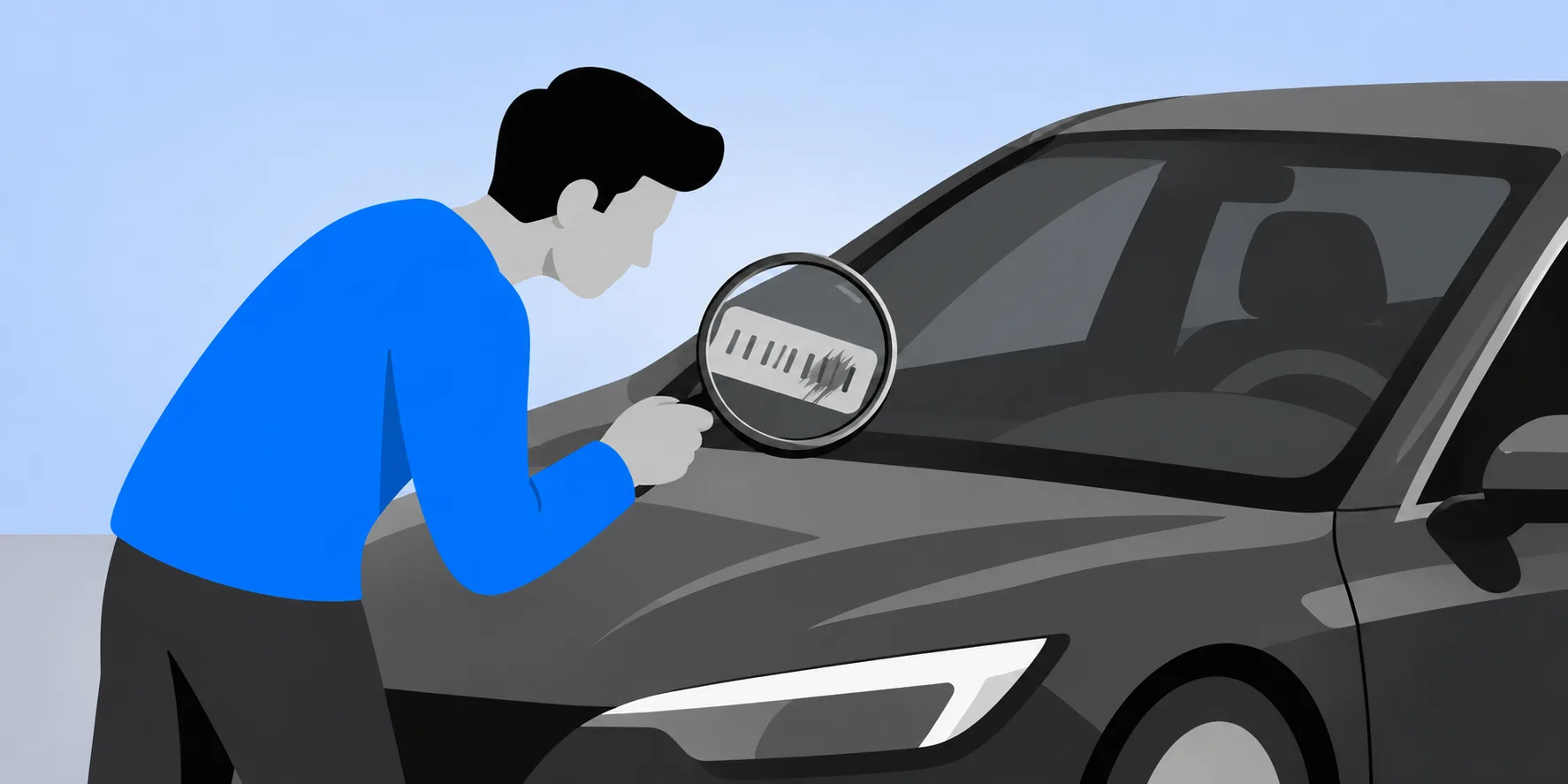
Look at the stamped number with a torch, from different angles. Factory characters have the same depth, the same spacing and the same font. Stop if you see:
- characters of different depths, crooked alignment or fonts that don't match each other;
- shinier metal, newer paint, filler or grinding marks around the number;
- weld marks or a patch of sheet metal that doesn't match the rest of the body;
- a windscreen plate held by rivets that differ from the originals, scratched or slightly crooked;
- a door label peeling at the edges, reprinted or missing altogether.
A missing door label doesn't automatically mean fraud (it can tear during a repair), but it is a reason to check everything else twice as carefully.
The check digit: a test that takes seconds
On many cars, the character in position 9 is a check digit calculated from the other characters. An invented or mistyped VIN usually fails the test. Not every European manufacturer uses this digit, so a failed result is not proof of fraud, but it is a signal to look more closely. The free VIN decoder checks the structure of the number and shows you which car left the factory under that code.
Mismatches in the papers and in the history
Cloning is the hardest to spot on the body, because the VIN is real, it just belongs to another car. This is where comparing what the VIN says with what you see in front of you helps:
- the decoding shows a different colour, engine, gearbox type or year than the actual car;
- the factory equipment doesn't match the features in the car;
- the history shows a total loss or a scrapping, while the car in front of you looks intact;
- the mileage in the history doesn't fit the real wear of the steering wheel, pedals and seats (see also the signs of a rolled-back odometer).
A VIN report brings the damage records, mileage readings and theft check together in one place, so you can compare them with the car. See a sample report and, separately, the stolen car check.
The check at the viewing, step by step
- Write down the VIN from the documents before you look at the car.
- Read the VIN behind the windscreen and compare it character by character. Look at the plate too: is it straight, with the original rivets?
- Find the number stamped into the body and look at it with a torch from different angles (where to find it: our VIN location guide).
- Check the door label: is it original, intact, with the same VIN?
- Compare the car with the decoding: year, engine, colour, gearbox type.
- Ask for a diagnostic readout at a dealer workshop if you have doubts. The VIN stored in the control units must be the same.
It takes fifteen minutes and can spare you the most serious problem a used car can have.
Typical situations
The car "imported yesterday", at a very good price
A recent, mass-produced car, priced well below the market, with papers "from the import, not registered yet". Here cloning is a real risk: the papers may belong to another identical car. Check the history and the VIN in every location, and if something doesn't add up, walk away.
The windscreen plate looks new, everything else looks old
The plate is clean and shiny, while the dashboard and windscreen are worn. It may be a replaced windscreen with the plate moved correctly, or a replaced plate. Ask for the windscreen invoice and check the other locations.
The history shows a different colour
The decoding or the history shows a white car, and the one in front of you is black. It may be a full respray, which is legal if it is recorded in the papers, or a car that is not the one in the papers. Ask to see the original colour in places that are hard to paint: under the seals, in the boot, under the bonnet.
What to do if something doesn't match
- Don't pay a deposit and don't sign anything. Explanations like "it came like that from the import" don't change the fact that a car can't be registered with a VIN that differs.
- Ask for a check by the national vehicle authority or an authorised dealer workshop, which can read the VIN from the control units and compare it with the one on the body.
- If you have already bought the car and find out it is cloned or stolen, go to the police and a lawyer. The contract and the proof of payment are the documents you use to claim your money back.
For the other checks before buying, the full list is in our guide to checking a used car, and for the paperwork, which documents to check before you pay.
Frequently asked questions
Where must the VIN match?
On the plate at the bottom of the windscreen, on the number stamped into the body, on the label on the door or in the engine bay, and in the registration documents. Character for character.
What are the signs of an altered VIN?
Characters of different depths or fonts, crooked alignment, new paint, filler or grinding marks around the number, welds, replaced rivets on the windscreen plate, or a door label that is peeling or reprinted.
What is a cloned car?
A car, usually stolen, that received the VIN and papers of an identical damaged or scrapped car. The VIN is real but belongs to another car, so differences show up in the colour, engine, equipment or history.
Does the check digit prove that a VIN is fake?
Not always. Many European manufacturers don't use a check digit in position 9. If the test fails, it is a signal to check more closely, not proof of fraud.
What is the risk of buying a car with a fake VIN?
The car can't be registered, and the police can seize it for investigation. You are left without the car until the investigation ends and have to claim your money from the seller with the contract and proof of payment.
How long does it take to check the VIN at a viewing?
About fifteen minutes: you compare the VIN in the documents with the one behind the windscreen, the one stamped into the body and the door label, then compare the car with the decoded data.

With over 15 years of experience in sales and a solid track record in the premium car segment, Marius brings to Certcar's content a perspective shaped directly by working with people and the used car market. The articles are practical and easy to understand, built on the real situations and questions that come up when buying a car.