How to recognise a car repaired after an accident
Find out how to identify a car repaired after an accident using its damage history, previous photos, and careful bodywork inspection.
A repaired car is not automatically a wrong choice
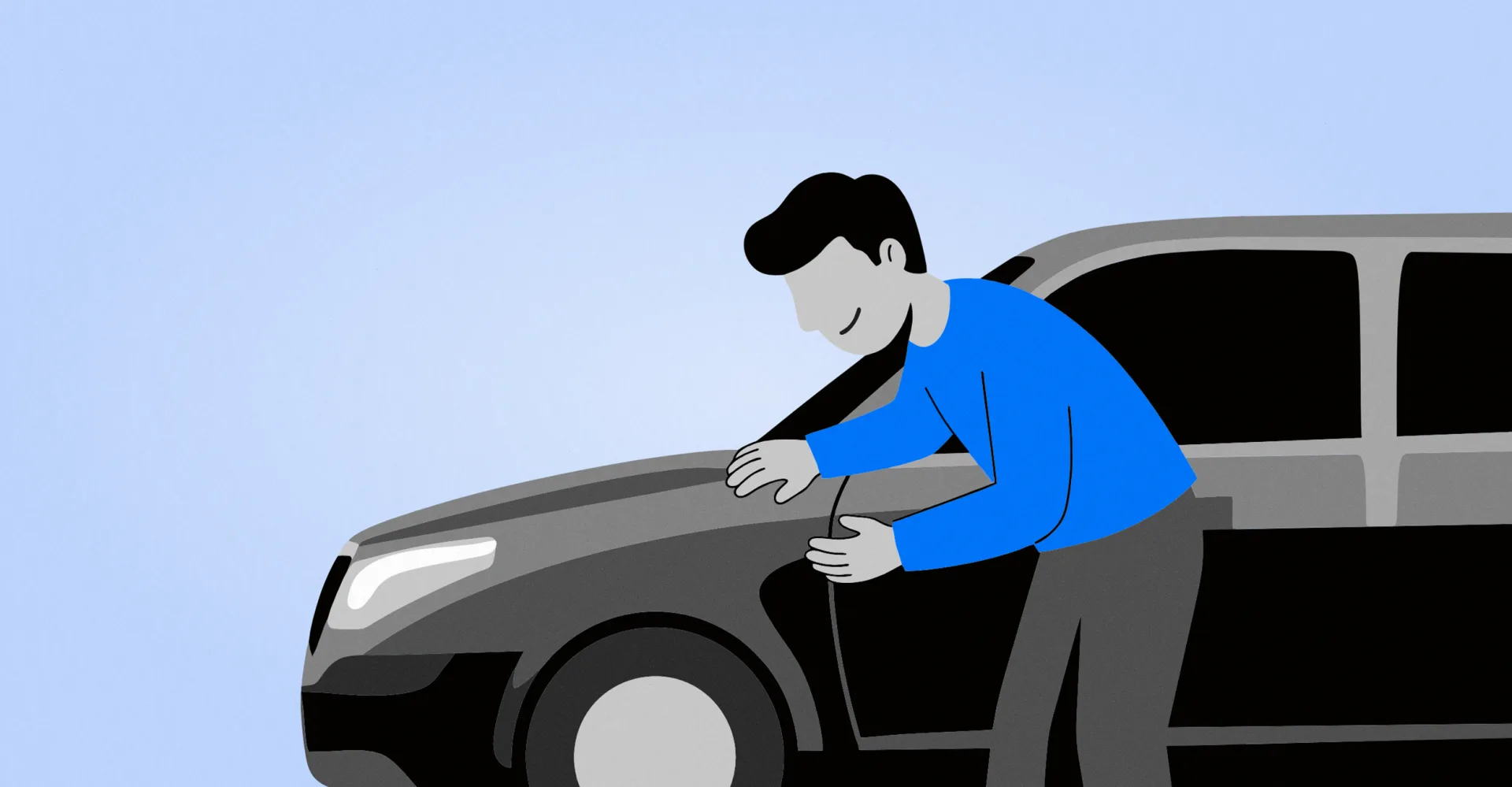
Many used cars have, at some point, had a scratch, a repainted element or minor damage. This does not automatically mean you should give up on buying.
What matters is how serious the accident was, which areas were affected and how the repair was carried out. A repainted door is completely different from an intervention on the chassis rails, pillars, roof or safety systems.
Problems arise when significant damage is hidden, and the car is presented and evaluated as accident-free. To identify such a situation, you need to combine the history available by VIN with a physical and technical inspection.
Check the damage history by VIN
Before you go for a viewing, request the chassis number and check the available history for the car.
Depending on the country of origin and the sources consulted, a report may contain:
- the date the damage was recorded;
- the country where it was reported;
- the affected areas;
- the estimated repair value;
- the mileage recorded at that time;
- photos taken before repair;
- appearances in older auctions or advertisements.
Compare this information with what the seller states. If they claim the car has not been hit, but the report shows a significant event, ask for explanations and documents about the repair.
The financial value of the damage does not always indicate the exact severity. Costs vary depending on the country, make, price of parts and labour rate.
Analyse previous photos
Photos taken before repair can be more relevant than the estimated damage value. They allow you to see which areas were affected and what condition the car was in.
Look out for, in particular:
- the front end and engine compartment;
- the chassis rails;
- the pillars and sills;
- the roof;
- the airbag area;
- the suspension and wheel position;
- the rear end and boot floor.
A bumper, wing or headlight can be replaced without affecting the car's structure. In contrast, deformation of the engine compartment, roof, pillars or floor can indicate structural damage.
Compare the previous photos with the current condition of the vehicle. Check whether the affected elements have been replaced, correctly repaired or merely cosmetically masked.
Look at the bodywork from multiple angles
The car should be inspected when it is clean, dry and, ideally, in natural light. Rain and poor lighting can hide colour differences and paint defects.
Look for:
- differences in shade between elements;
- areas with different gloss or texture;
- traces of paint on seals and plastic elements;
- masking edges;
- particles or runs under the clear coat;
- deformations and undulations of the sheet metal;
- elements that are not correctly aligned.
Also look at the surfaces from the side. Differences in texture and deformations are easier to observe when light reflects obliquely.
Keep in mind that plastic bumpers may have a slightly different shade from metal elements even when the paint is original.
Check the gaps between bodywork elements
The bonnet, doors, wings and boot should have relatively uniform gaps. Poor alignment can indicate the removal or replacement of elements.
Check:
- the distance between the bonnet and wings;
- the alignment of headlights and tail lights;
- the position of the doors relative to the sills;
- the closing of the bonnet and boot;
- the symmetry of the bumpers;
- the differences between the left and right sides.
An unevenly fitted element does not, by itself, prove the existence of a serious accident. It could be the result of a minor repair or incorrect adjustment. However, it does represent a reason for further checks.
Measure the paint layer thickness
A paint thickness gauge can indicate whether an element retains its original finish, has been repainted or contains a layer of filler material.
Measure several points on each element and compare the values between similar areas of the car. Do not draw a conclusion based on a single measurement.
Results may vary depending on:
- make and model;
- manufacturing process;
- material of the element;
- area measured;
- any previous interventions.
A higher value does not automatically mean the repair was poorly done. What is important is whether there are significant differences and if these correspond to the explanations provided by the seller.
Some devices cannot correctly measure parts made of plastic, aluminium or composite materials. Check if the device used is compatible with the surface being analysed.
Check screws, welds and hidden areas
Open the bonnet, doors and boot. Inspect areas that are harder to conceal with a simple repaint.
Look for:
- screws with signs of being undone;
- damaged paint around fasteners;
- welds different from the opposite side;
- unevenly applied sealant material;
- creases or deformations of the sheet metal;
- signs of straightening;
- corrosion in repaired areas;
- structural elements with a different appearance.
Compare the left side with the right side. Differences in shape, welding or sealing can indicate an intervention.
A removed wing may have a minor explanation. However, signs of work on the chassis rails, sills or pillars require a professional evaluation.
Compare headlights and windows
Headlights, tail lights and windows may have the manufacturing period inscribed. A difference between these can indicate the replacement of a component.
Check:
- the headlights and tail lights;
- the windscreen and rear window;
- the side windows;
- the seat belts;
- the elements inside the boot.
A changed windscreen does not prove the existence of an accident, as it can be replaced due to a crack. Nor does a newer headlight automatically indicate serious damage.
However, multiple components replaced in the same area, along with other signs of repair, must be carefully analysed.
Check airbags and safety systems
A significant accident can deploy airbags and seat belt pretensioner systems. Improper repair of these can compromise the car's safety.
Pay attention to:
- the airbag warning light on the dashboard;
- airbag covers with a different appearance;
- dashboard or steering wheel unevenly repaired;
- unusual stitching on seats;
- seat belts that do not retract correctly;
- errors identified during diagnosis.
The airbag warning light should illuminate when the ignition is switched on and extinguish after the system check. If it does not light up at all or remains lit, the car must be checked at a service centre.
Electronic diagnosis can identify certain errors, but it cannot alone confirm that all safety components have been correctly fitted and repaired.
Observe the car's behaviour during a test drive
An incorrect structural repair can affect steering, stability and tyre wear.
During the road test, check if:
- the car maintains its direction;
- the steering wheel is straight;
- vibrations appear at higher speeds;
- the car pulls to one side when braking;
- noises are heard from the suspension;
- the doors make noises over bumps;
- there are draughts or unusual noises.
Also analyse tyre wear. Very different wear between wheels can indicate geometry, suspension or structural problems.
These symptoms can also have other causes, but they must be investigated before purchase.
Check the car on a lift
An inspection at an independent service centre can highlight repairs that are not visible externally.
On the lift, the following can be identified:
- signs of straightening;
- welds and repairs to the floor;
- replaced suspension components;
- missing or incorrectly fitted protections;
- leaks that appeared after impact;
- corrosion in repaired areas;
- differences between the lower elements.
For a car with significant damage in its history, also request a geometry check. The exterior appearance cannot confirm that the structure has been correctly restored to its original shape.
Is a repaired car worth buying?
The decision depends on the severity of the accident and the quality of the repair.
A car with repainted or replaced exterior elements can be a correct purchase if:
- the structure has not been affected;
- the repair was carried out professionally;
- the safety systems are functional;
- the seller transparently presents the history;
- the price reflects the vehicle's past.
Be much more careful if the chassis rails, pillars, roof, floor or safety systems have been affected. These areas can influence the car's behaviour and occupant protection in another accident.
Not every damage should make you give up on buying, but no significant damage should be ignored.
Check the history before viewing
A report checked by VIN can highlight damage events, affected areas, repair estimates and available previous photos.
Compare the information in the report with the current condition of the car and complete the check with an inspection at an independent service centre.
Frequently asked questions
Does a repainted element mean the car had a serious accident?
No. An element can be repainted due to a scratch, light impact, or cosmetic repair. The severity must be assessed based on the affected areas and the quality of the work.
Does a report without damage guarantee that the car has not been hit?
No. Events that have not been reported or recorded in available sources may not appear. The report must be supplemented with a physical inspection.
How do I find out if the airbags have deployed?
Previous photos, electronic diagnosis, and inspection of interior elements can provide clues. Confirmation must be carried out at a service centre that can check the safety systems.
Can I check myself if the car has been repaired?
You can identify certain visible signs, but the assessment of the structure, geometry, and safety systems must be done by a specialist.
Is a car repaired after an accident safe?
Safety depends on the affected areas and the quality of the repair. Cosmetic damage is different from an intervention on the structure or safety systems.

With over 15 years of experience in sales and a solid track record in the premium car segment, Marius brings to Certcar's content a perspective shaped directly by working with people and the used car market. The articles are practical and easy to understand, built on the real situations and questions that come up when buying a car.