How to recognise a flood-damaged car before you buy it
Find out what the signs of a flood-damaged car are, where to check for water traces, and what problems can arise after the vehicle has been dried and cleaned.
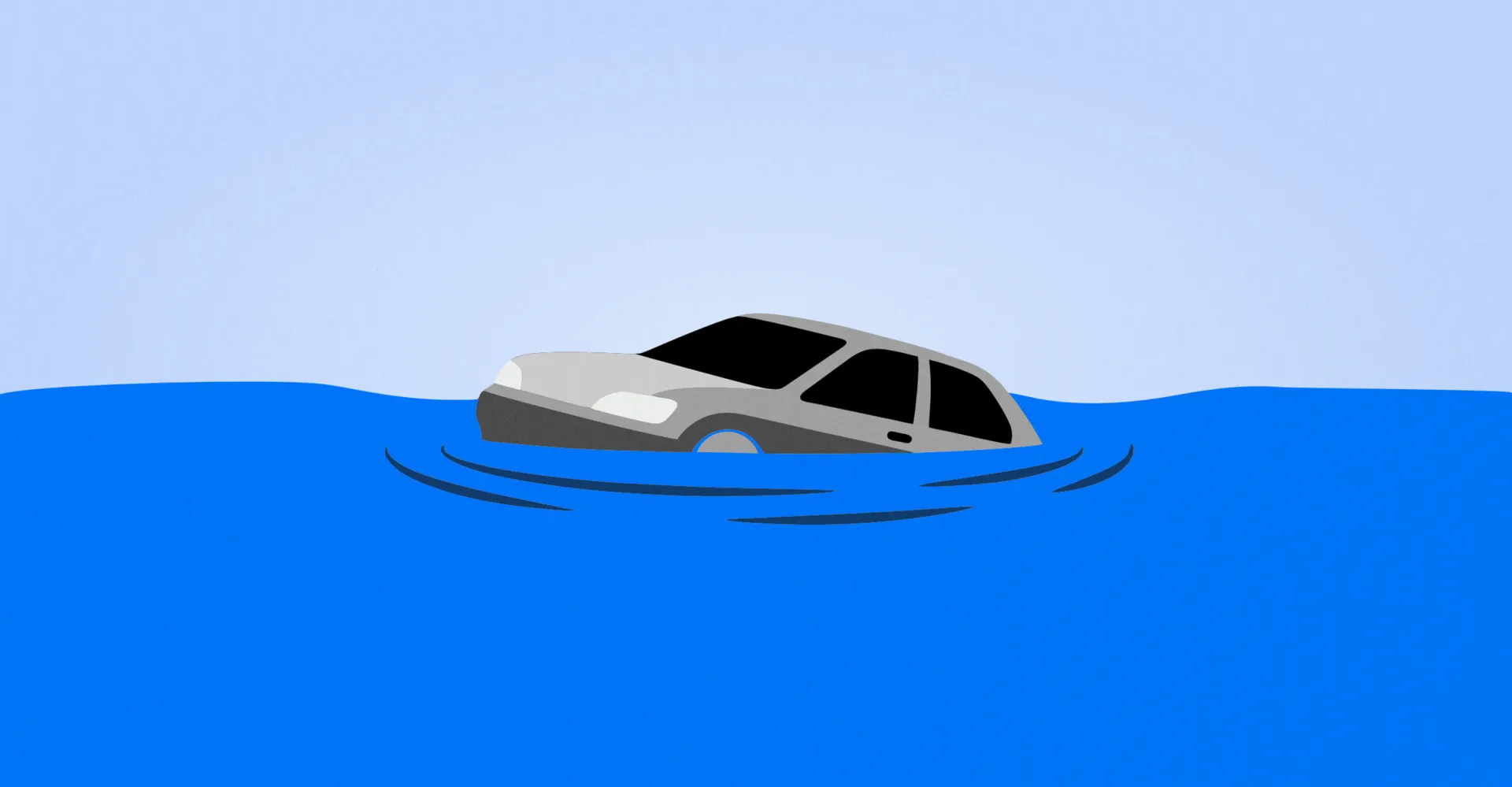
A flood-damaged car can look impeccable at first glance
After a professional cleaning, a water-damaged car can look very good in photos and even during a superficial viewing.
The upholstery can be washed, the carpet replaced, and odours can be masked. However, the real problems can remain in the electrical system, electronic modules, connectors, safety systems and hidden areas of the bodywork.
Some faults appear immediately, but others develop over time as corrosion progresses. For this reason, a flood-damaged car can function normally on the day of inspection and may start to have problems after a few weeks or months.
Why are water-damaged cars dangerous?
Water can reach places that cannot be completely cleaned and dried without disassembling the interior and components.
Depending on the water level and type, the following can be affected:
- wiring;
- plugs and connectors;
- electronic modules;
- airbag systems;
- seatbelts and pretensioners;
- audio system;
- comfort systems;
- sensors;
- engine and transmission;
- bearings and joints;
- sound-absorbing materials;
- metal structure;
- high-voltage battery in electric and hybrid vehicles.
Saltwater or contaminated water can accelerate corrosion and leave residues that are difficult to remove.
Check the history using the VIN
Before going to view the car, request the VIN and look for available information about the vehicle.
A report may contain:
- damage events;
- mentions associated with a flood;
- total loss status;
- previous photos;
- auction appearances;
- countries where the vehicle has circulated;
- recorded mileage;
- data on previous use;
- other relevant events.
Photos taken before repair can show the water level, mud inside, fogged windows, or the car's condition at auction.
A report without mentions of flooding does not guarantee that the vehicle has not been affected. The event may not have been reported or recorded in the available sources.
Pay attention to the interior smell
A persistent smell of damp, mould, or stale material can indicate water ingress into the cabin.
A very strong perfume used to mask odours can be equally suspicious.
Check the car with the climate control system off, then turn on the fan and air conditioning. Observe if unusual odours emerge from the ventilation vents.
A damp smell can also come from other causes, such as:
- windscreen leaks;
- sunroof leaks;
- damaged seals;
- dirty evaporator;
- water accumulated in the boot.
The smell alone does not confirm a flood, but it warrants a careful inspection.
Lift the carpet and check the materials underneath
The carpet surface can dry quickly, but the insulating materials underneath can retain water for a long time.
Check, where possible:
- under the floor mats;
- the edges of the carpet;
- the area under the seats;
- the spare wheel well;
- the side compartments of the boot;
- tool recesses;
- the areas under the rear bench.
Look for:
- dampness;
- stains;
- dried mud;
- sand;
- mould;
- deformed insulating material;
- colour differences;
- traces of recent cleaning.
Do not dismantle components of a car that does not belong to you without the seller's consent. Request an inspection at a service centre if access is difficult.
Check the seat rails and fixings
Seat rails, screws, and metal elements close to the floor can retain traces of corrosion.
Look for:
- unusual rust;
- oxidised screws;
- whitish or greenish deposits;
- differences between the left and right sides;
- traces of recent disassembly;
- excessive lubrication applied over corroded areas.
A small amount of oxidation can also appear due to ordinary dampness. Corrosion present simultaneously in several areas of the cabin is more suspicious.
Inspect the seatbelts
Pull the seatbelts out completely and check the part that normally remains rolled inside the pillar.
Look for:
- water stains;
- colour differences;
- traces of mud;
- mould;
- unusual smell;
- slow retraction or jamming.
The seatbelts can indicate the level to which the water reached, as hidden areas are harder to clean.
A damaged seatbelt or one that does not function correctly must be replaced regardless of the cause of the problem.
Check the boot and spare wheel
Water can remain in the lowest part of the boot, even if the rest of the interior appears dry.
Lift the boot floor and inspect:
- the spare wheel well;
- tools;
- the jack;
- electrical plugs;
- electronic modules;
- insulating materials;
- welds and joints;
- drainage holes.
Dried mud, rust, or water traces in this area are difficult to explain by a simple car cleaning.
Bear in mind that water can also enter the boot through a faulty taillight, seal, or drain channel. The exact cause must be determined.
Look for deposits in hard-to-reach places
After a flood, sand and mud can remain in areas that ordinary cleaning does not cover.
Check:
- under the dashboard;
- behind the trim;
- around the wiring;
- under the seats;
- in the corners of the boot;
- inside compartments;
- around the pedals;
- in the ventilation vents;
- in the speaker recesses.
Deposits present in several areas of the car represent an important signal.
Analyse the electrical system
Water and electrical components are a combination with unpredictable effects.
Test:
- electric windows;
- mirrors;
- central locking;
- seat adjustments;
- heated seats;
- lights;
- indicators;
- multimedia system;
- video camera;
- parking sensors;
- climate control;
- steering wheel controls;
- electric tailgate;
- assistance systems.
Pay attention to functions that operate intermittently, messages that appear and disappear, or lights that flicker.
An electronic diagnosis must check all modules, not just the engine control unit. Recently deleted errors or lack of communication with certain modules require further investigation.
Check the plugs and connectors
Electrical connectors can retain traces of oxidation even if the interior has been cleaned.
Possible signs include:
- green deposits;
- whitish deposits;
- oxidised pins;
- traces of dampness;
- recently cleaned contacts;
- rewired cabling;
- unevenly applied insulating tape.
Do not disconnect plugs without the owner's consent and without knowing the correct procedure. Certain components can be sensitive or belong to safety systems.
Look at the headlights and taillights
Persistent condensation, water stains, or deposits inside the light units can indicate exposure to moisture.
A headlight with condensation alone does not prove that the car was flooded. It may have a cracked housing or a faulty seal.
It becomes more suspicious if the same problem appears in several lamps and is accompanied by corrosion or water traces in other areas.
Check the oil and fluids
If water has reached mechanical components, problems can arise with the engine, transmission, differentials, and other assemblies.
A mechanic must check:
- engine oil;
- transmission oil;
- differential fluids;
- filters;
- intake;
- air filter housing;
- bearings;
- ventilation systems.
The normal appearance of the oil does not exclude a flood. Fluids can be replaced before sale, and some problems may appear later.
Additional attention for electric and hybrid cars
In electric and hybrid vehicles, water can affect the high-voltage battery, connectors, inverter, and charging systems.
Do not inspect or touch high-voltage cables or components.
The inspection must be carried out at a service centre equipped for such vehicles and must include:
- battery diagnosis;
- leakage check;
- connector control;
- high-voltage system errors;
- charging function;
- any procedures recommended by the manufacturer.
A water-damaged electric car should not be evaluated solely by a short test drive.
Check if the interior has been replaced
An unusually new interior relative to the car's age and mileage can indicate the replacement of components.
Compare:
- the seats;
- the carpet;
- the headliner;
- the door cards;
- the seatbelts;
- the trim;
- the screws and fastening elements.
Traces of disassembly on several components may have a legitimate explanation, but they must be clarified.
Also check if the shades, materials, and manufacturing year of the components match each other.
Why can problems appear later?
Even if the car has been dried, dampness and residues can remain in the wiring, plugs, and insulating materials.
Over time, the following can appear:
- corrosion;
- short circuits;
- battery discharge;
- intermittent errors;
- module failure;
- safety system problems;
- mould;
- persistent odours;
- mechanism jamming;
- bearing and joint problems.
Intermittent faults are difficult to diagnose and may require the replacement of several components.
Is it worth buying a flood-damaged car?
In most situations, such a purchase involves a high risk, especially if the water level reached the cabin or the electronic systems.
Only consider the car if:
- the event is documented;
- the water level is known;
- previous photos exist;
- repairs are proven;
- the electrical system has been checked;
- there is no active corrosion;
- an independent service centre confirms the condition;
- the price reflects the risk;
- you understand the impact on resale.
A large price reduction does not always compensate for the risk of electrical and safety faults that may appear later.
Check the history before viewing
A VIN check can highlight damage events, previous photos, auction appearances, and other information not mentioned in the advertisement.
Enter the VIN on Certcar and consult the available history before going to view the car. Supplement the report with a full diagnosis and an inspection at an independent service centre.
Frequently asked questions
What does a flood-damaged car smell like?
It can have a smell of damp, mould or stale material. Very strong perfume can be used to mask odours, but no smell alone confirms a flood.
Does rust under the seats mean the car was flooded?
Not necessarily. Rust can also appear due to other causes. It becomes suspicious if it is present in several interior areas and is accompanied by deposits, dampness or electrical problems.
Can a flood-damaged car function normally?
Yes. Some problems appear gradually, as corrosion affects connectors, wiring and electronic modules.
Does the VIN report always show if the car was flooded?
No. The event must have been reported and recorded in an available source. The report must be supplemented with a physical inspection.
Can a flood-damaged car be repaired correctly?
It depends on the water level, its type and the affected components. Complete repair may require disassembling the interior and replacing many electrical and safety components.
Is a water-damaged electric car safe?
It cannot be considered safe without a specialised check of the battery and high-voltage system. Do not touch high-voltage components or cables.

With over 15 years of experience in sales and a solid track record in the premium car segment, Marius brings to Certcar's content a perspective shaped directly by working with people and the used car market. The articles are practical and easy to understand, built on the real situations and questions that come up when buying a car.